key specifications
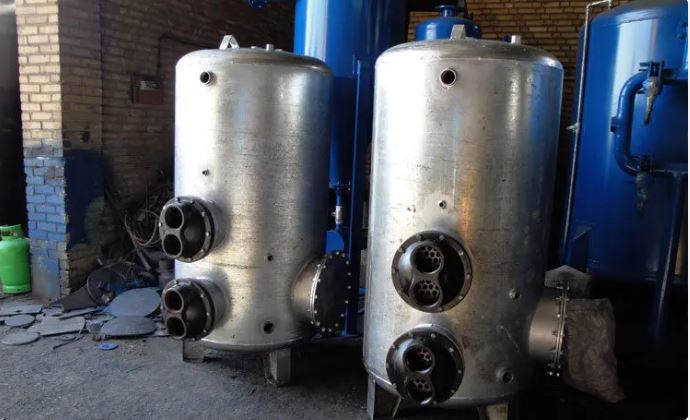
Coiled tank is a set of cylindrical body and several copper pipes (coils) in which hot water and steam coming out of the boiler enters the coils and heats the cold water entering the cylindrical tank. Coiled tank is actually a new generation. It is a double-walled tank, both of which are used to supply hot water to buildings and industrial environments. Of course, there are differences in the structure of these two sources, in other words, the main difference between a double-walled tank and a coiled tank is the existence of two nested cylindrical tanks in the double-walled type. However, for the coiled tank, only a cylindrical body is used and the temperature is exchanged with the coils.
How coiled tank works
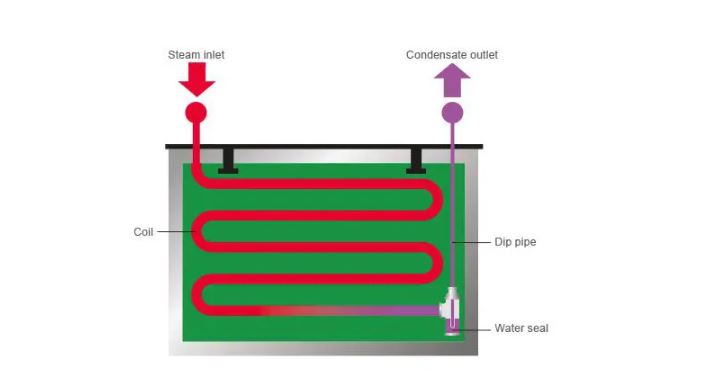
The hot water and steam produced by the boiler enter the copper pipes or coils installed inside the cylindrical body with the help of circulating pumps. Cold water of city piping enters the tank through one-way valves installed on the body of the tank and due to the temperature difference between the water inside the pipe and the tank, the temperature is exchanged. As a result of the tank water colliding with these pipes, their temperature increases to more than 50 degrees, and finally they are ready for consumption through the outlet valves. The water in the coils is returned to the boiler when the temperature is lost again and this cycle continues.
Types of coiled tanks
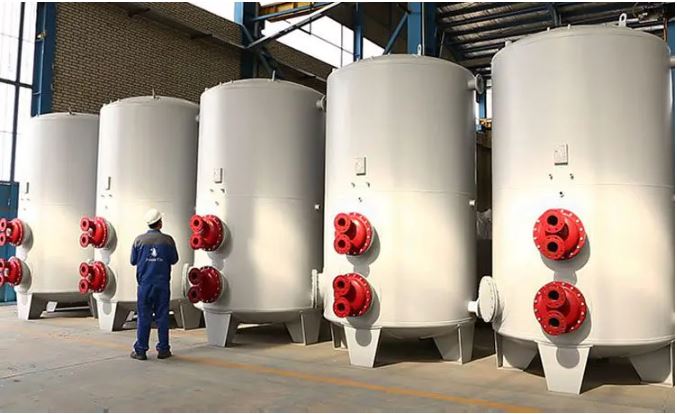
Depending on the characteristics required in the heat sources, when producing coiled tanks, they are designed in different types. In a general category, they were divided into two groups: standing coiled tank and horizontal coiled tank. The difference between these two types of coil sources is in the installation of their cylindrical body and they are not different from other components. Depending on the location of the tank and the amount of space available to place the tank and their required dimensions, one of these two types of coiled tanks can be selected.
In another grouping and according to the installation and placement of the coils, this tank can be divided into two groups: helical and U-shaped coils.
Standing coil source
U-shaped coiled tanks
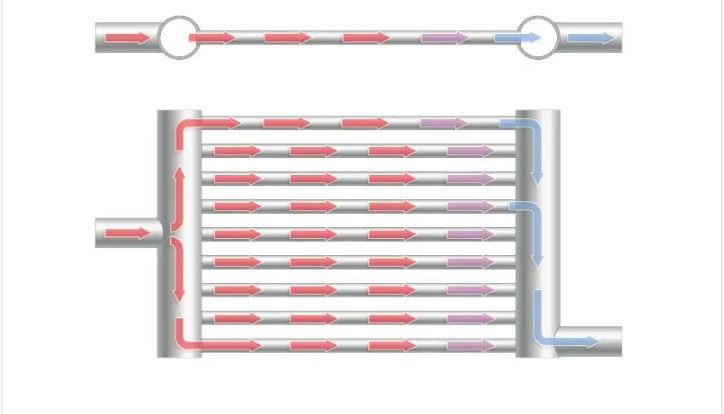
As the name of this group indicates, copper pipes are installed in the form of the letter U in the tank, the number of pipes is determined as needed and in most cases will be more than one pipe. One of the main reasons for using this type of coils is to increase the performance and efficiency of the device. So that after blocking or causing damage in a pipe, there is no disturbance in the operation of the tank and hot water and steam can flow in other pipes and supply hot water.
Helically coiled tank
Unlike the U-shaped type, in a helically coiled tank, the hot water flow is present only in a coil-structured tube, which heats the cold water in the tank. One of the biggest disadvantages of this type of coiled tank is the failure of the device in case of damage to the coil pipe. Because only one coil with a helical structure is installed inside the body, as a result of its breakdown or blockage, it will not be possible for hot water and boiler steam to pass through it.
Water to water and steam to water tank
Depending on how the energy and heat required to increase the temperature of the water in the coil are supplied, they can be divided into two groups: water to water and steam to water. As the name implies, the water-to-water tank uses the hot water to absorb the energy needed to heat the water in the coil, and if steam is used for this purpose, it is steam to water.