key specifications
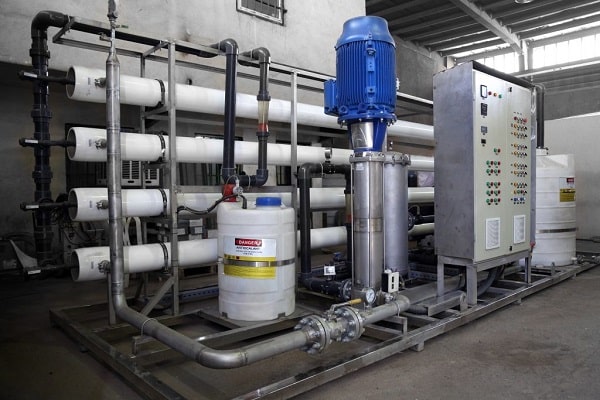
The livestock water purifier or Mahab livestock water desalination plant and the mechanism for producing healthy water for cattle farms follows a very advanced and extremely precise standard, and we have discussed its mechanism and mechanism in detail in the full description of this product.
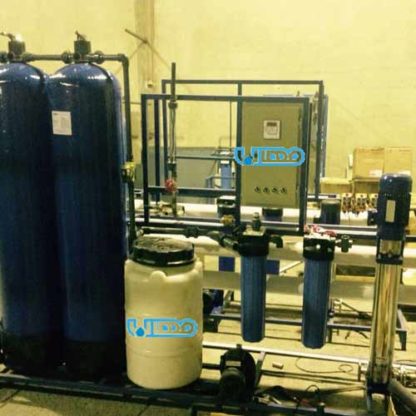
Using a water softener with food grade resins, a sand filter, and finally using an ozone or UV device for final disinfection reduces maintenance costs and improves the quality of the output water.
Livestock water desalination or cattle and livestock water purification device is one of the essential equipment for providing healthy and quality drinking water for all types of livestock in livestock farms. Livestock water desalination uses reverse osmosis to produce high-standard water. Water with heavy salts enters the water purification system and after going through several stages, the output is healthy water with ppm less than 100 in milligrams.
The necessity of using desalinated water in livestock farming
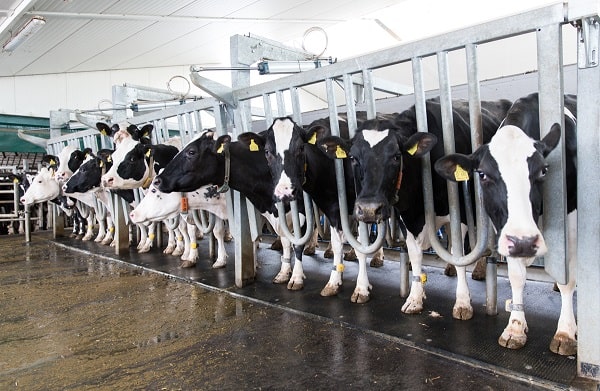
All living things need clean water to survive. It is clear that the most important and vital factor in the structure of a livestock unit is the provision of clean water for livestock. As you know, heavy salts in water cause the greatest damage to the tissue of living organisms, which unfortunately can even harm our human bodies. Now, the meat of livestock whose drinking water is not fed with desalinated water also has an ionic charge, salt, and heavy metals. The taste of this meat is also not interesting, and many slaughters of this type of animal are consumed frozen.
Livestock water purification device
Features of livestock and cattle water purification devices
The system for providing clean water for livestock farming, as well as the mechanism for producing clean water for cattle farms, follows a very advanced and extremely precise standard. In general, using water free of impurities and harmful minerals can help livestock grow more. The characteristics of a good livestock water purifier include the ability to remove contaminants such as iron, manganese, calcium, magnesium chloride, and chlorine from the water source.
Other characteristics of a livestock water purifier include the ability to work long hours and have a constant water output.
Usually, the water entering livestock farms is supplied from well water with relatively high hardness. A livestock water purifier should use pre-filtration and a double sand filter or a large sand filter. Usually, the well water entering the filter has a high turbidity that should not enter the membrane. This is while industrial water purifiers usually have relatively cleaner inlet water.
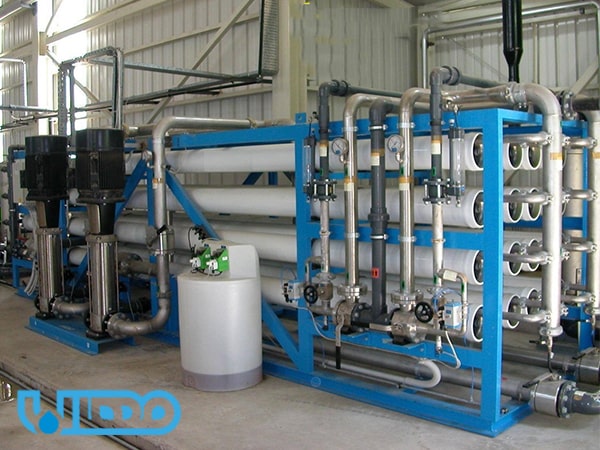
In the livestock water purifier system, water is first pressurized into the membrane system of the water purifier system. Then, several membrane tubes enter the water into the next tanks using reverse osmosis. Each tank undergoes a specific type of water filtration. In different stages, water salts, water-soluble ions, heavy metals, and finally microorganisms in the filtered water are collected, and healthy water without impurities is collected at the outlet of the device.