key specifications
Introduction
In industrial environments, factories, petrochemical plants, or even small workshops, just a few seconds can be the difference between a serious accident and complete safety. While smoke and heat detectors are important tools, they often lack the speed to detect small flames or initial sparks. So, what’s the solution? How can we identify a fire before it turns into a catastrophe?
Here, we will answer all your questions about flame detectors. From a precise definition of what a flame detector is to an overview of its types, how it works, and the factors that influence its price, we will provide you with everything you need to understand and make the right choice for this vital tool.
What is a Flame Detector?
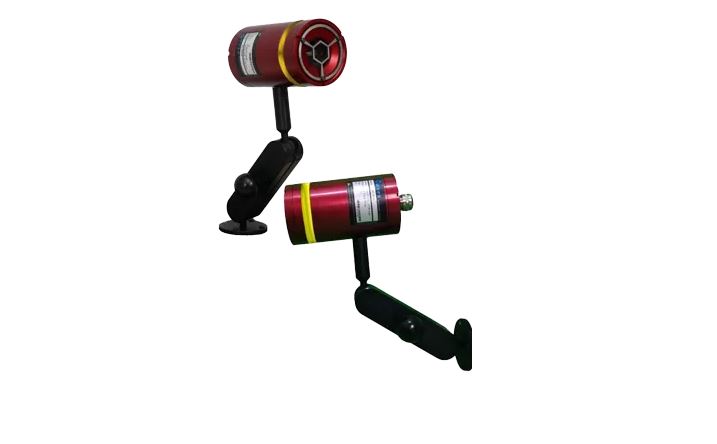
A flame detector is an advanced electronic device designed to quickly identify the presence of a flame in various environments. Instead of detecting smoke or heat, these devices analyze the electromagnetic radiation (such as Ultraviolet (UV) and Infrared (IR) rays) emitted by a flame. They identify and alert you to a fire the moment it starts.
Flame detectors are particularly ideal for high-risk environments such as refineries, fuel storage tanks, power plants, and warehouses, because they can detect a fire at its very beginning, even before smoke or heat reach a significant level. This speed of response is crucial, especially for extinguishing a fire in its initial moments.
Ionization Flame Detector
Among the types of flame detectors, the ionization flame detector holds a special place. This type of detector works by focusing on a physical process within a flame: ionization. When a flame is burning, it ionizes gas particles. The ionization detector measures these ions to detect the presence of a flame. The main advantages of this detector are:
High Sensitivity: These detectors can detect small and even invisible flames with high accuracy.
Fast Response: Due to their high sensitivity, they react to a flame very quickly.
However, due to their complexity and the need for precise calibration, the use of these detectors is more common in specialized and specific environments like laboratories and research facilities.
Types of Flame Detectors
Choosing the right detector depends on the type of environment and its potential hazards. Below, we examine the main types and their working principles.
Step One: Types of Flame Detectors
Flame detectors are divided into three main categories, each working based on the type of energy emitted by the flame:
UV Detectors (Ultraviolet): These detectors detect the ultraviolet radiation emitted by a flame. They are very fast but may experience false alarms from light sources such as welding or lightning.
IR Detectors (Infrared): These detectors identify the thermal energy (infrared) emitted by a flame. To prevent errors caused by sunlight, they often use multiple sensors at different frequencies (such as IR3).
UV/IR Detectors (Combined): This type uses both UV and IR technologies to maximize detection accuracy and minimize false alarms.
Step Two: Understanding the Flame Detector’s Operation
Every flame detector has one or more sensors that continuously monitor the environment. The moment optical or spectral patterns related to a flame (not normal light) are identified by the sensors, the device alerts. This process happens in a fraction of a second.
Step Three: Identifying Problems and Providing Solutions
The most common problem with flame detectors is false alarms. This can be caused by sunlight, welding, or even dust particles. To solve this problem, you should use detectors with advanced optical filters or combined (UV/IR) models. Additionally, periodic calibration and cleaning of the sensors are very important.