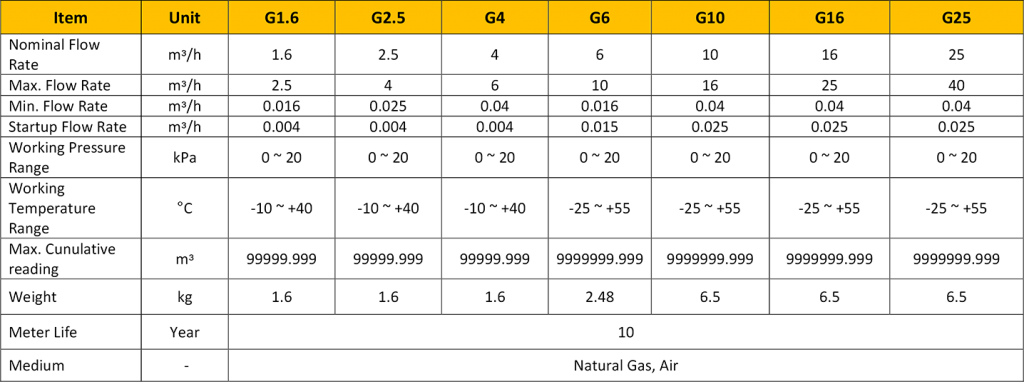
key specifications
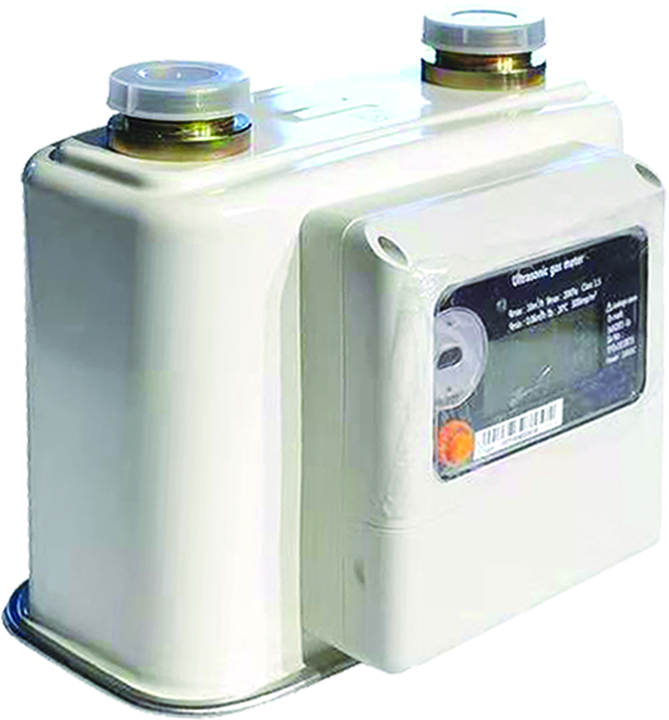
Ultrasonic gas meters for homes, using ultrasonic waves, are able to measure the flow volume of a wide range of gases (including natural gas) with high accuracy and independently of electrical conductivity, pressure, temperature and viscosity.
This technology is not only used in homes, but is also used in various industries for accurate gas measurement.
Ultrasonic_gas_meter
Ultrasonic meter technology and how it works
What is ultrasonic technology and how does it work?
In various industries where measurement accuracy and flow traceability are crucial, ultrasonic sensors are used as the main and reliable solution. These sensors are installed in two general ways:
In-line Ultrasonic Sensors, which are installed in the flow path of the pipe.
Clamp-on Ultrasonic Sensors are mounted on the outer wall of the pipe and allow for temporary measurement or system robustness.
Types of Ultrasonic Sensors in Water and Gas Meters
In ultrasonic meters, there are two main types of transducers:
Clamp or Wet Clamp
In-line type
Operating principles of ultrasonic meters with differential transit time method
The flow measurement method in ultrasonic meters is based on a simple physical phenomenon: swimming in the direction of the flow requires different time and energy than swimming against the flow direction.
These meters use two ultrasonic sensors located in the pipe to measure the time it takes to send and receive ultrasonic signals in both directions.
When liquid flows through the pipe, the ultrasonic signals travel faster in the direction of flow and slower in the opposite direction.
The time difference between sending and receiving the signals, recorded by these two sensors, is directly proportional to the speed and flow rate of the flow, and in this way the flow rate is measured with high accuracy.
Features and Benefits of the IFA Sanat Ultrasonic Meter
Highly accurate performance: Measurement accuracy up to 0.5% in high and medium flow rates and 1% in low flow rates
Excellent accuracy range: R375 for household meters and R1000 for industrial applications
Long battery life: Lithium batteries type D up to 10 years and type C up to 3 years
Independent measurement of environmental conditions: No influence of pressure, temperature, density, conductivity and viscosity (for homogeneous liquids)
No moving parts: Significant reduction in maintenance costs
Long service life: No wear and corrosion
Versatile design: In-line and clamp-on for constant or temporary flow measurement
Remote control capability: Ability to connect to on-off valves for smart management
Smart and secure system: Equipped with cloud service for easy monitoring and management
IP68 protection standard: Dust and water resistant, with the ability to withstand a depth of one meter for One hour