key specifications
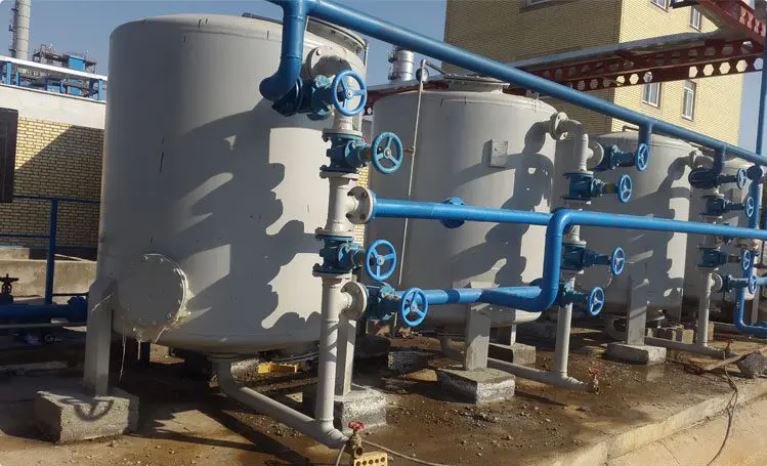
Water treatment in nature is done in various ways, one of the most important of which is the removal of waste products from the water by passing it through a sand bed. In designing and manufacturing sand filters, this nature-inspired behavior is less costly than other water treatment methods such as ultrafiltration and nanofiltration to remove suspended particles in water. Sand filters are actually a type of tank that has an inlet and an outlet valve and nozzles with sand and silica coating. Particles suspended in water will not pass through the filter and nozzle covered with sand grains, and eventually the water outlet will be clean and purified.
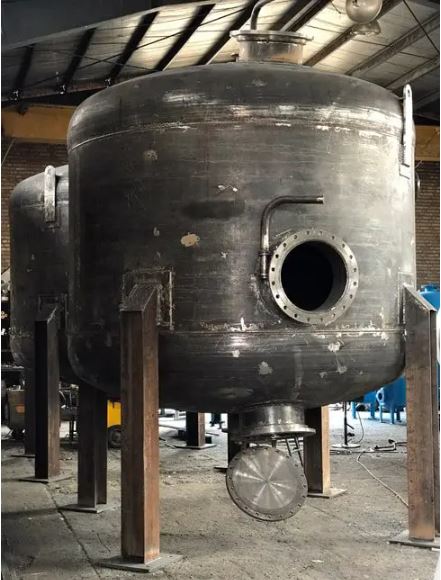
The body of sand filters is made of different materials, the most common of which are metal, fiberglass and concrete bodies. The metal bodies of this equipment are made of galvanized sheets and the type of concrete that is mostly used for high capacity refineries is made of concrete and is very strong. Fiberglass filters are made from pressed composites and are also known as FRP sand filters.
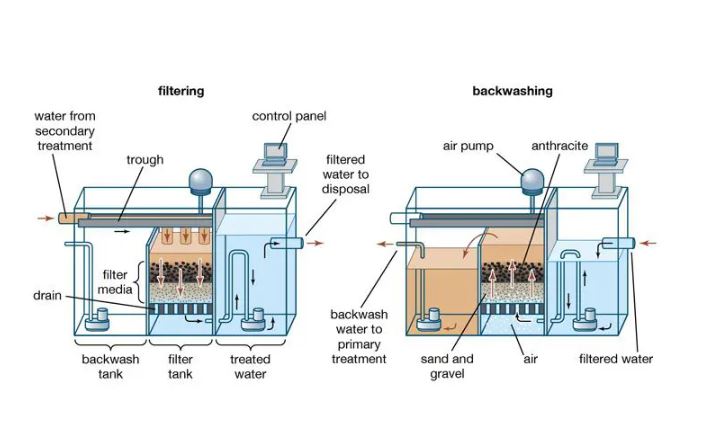
In general, without considering the different types of sand filters, how they work can be described as follows:
Water containing salts, iron, manganese, suspended particles of mud, etc. enters the tank from the inlet valve.
Inside the tank are provided nozzles covered with sand and silica. In order to prevent corrosion of the nozzles, the coating of sand and silica on the nozzles is done in such a way that first the grains are larger, then medium and finally fine grains. The passage of water through the nozzle causes particles larger than 100 microns to hit the grains of sand and do not allow the passage of the nozzles, and only water droplets pass through the nozzle without suspended particles.
Particle-free water is transferred from the tank outlet valve to the outside of the device and used.
Types of sand filters
A very important point in the design of a sand filter is the force that causes water to pass through the nozzle. Accordingly, and according to the amount of pressure applied to the water to pass through the filter, sand filters can be divided into several general groups, which are:
Slow Sand Filter
This type of sand filter is common in nature and operates without any pressure force. The passage of water through the sand bed at a completely natural and calm speed in an area of one square meter, in a day and night, finally produces 3 cubic meters of purified water. Due to the very low speed of this group of water treatment methods, it is mostly used for industrial and home environments where the need for treated water is low. For example, in rural water network treatment plants, sand filter can be a suitable and cost-effective option.
Rapid Sand Gravity Filter
This group of sand filters is very similar to the slow and quiet type, and the only difference is the area of the sand bed through which the water passes. In order to pass water with higher pressure and speed, a bed covered with low sand and silica and about 40 to 100 square meters is considered. In the type of soft sand filter, the area of the sand bed is considered to be about 300 to 800 square meters. One of the advantages of this method is the higher purification speed than the slow type. Of course, it should be noted that because water passes through a small bed of sand, the speed of soiling of the sand bed increases and therefore requires more washing than the slow type.
Rapid Sand Pressure Filter
Rapid Sand Pressure Filter is one of the most widely used types of sand filter that is mostly used in industrial and even home environments that need faster water treatment. The passage of water with the pressure entered from the pump causes the speed of its passage through the sand bed and nozzles to increase, and in a short time the output of the treated water will be much higher than the previous two methods. The most common type of pressure filter is pool filters, which are widely used in home and public pools.